Tom's Sound Design
'Recondition' - Drama from SHU Film & Media Production on Vimeo.
Thursday, 5 May 2016

Thursday, 28 April 2016
Wednesday, 20 April 2016
Evaluation of Module
From September 2015 to April 2016 I have learnt and improved on many skills whilst building my portfolio of work for the creative project development and realisation module. I have enjoyed the module, however I have found each project challenging in different ways, which I believe has made me a more adaptable learner and more frequent problem solver.
My knowledge and understanding of the different mediums of films has increased convincingly. I have learnt common conventions of experimental film, documentary and drama, and I am more confident in different areas of the production which I had little experience before University. As well as this I have learnt even more so the importance of being organised, and this skill of mine has been put at the forefront of every group project in this module, and created efficiency when it came to planning. However, teamwork and relying on others is something I have struggled with in the past, and I have tried my hardest this year to put into practice in trusting others abilities in order for a project to be complete to a high standard. This is something I believe has been a valuable skill I have learnt for the future, and I have learnt to step back when necessary in order to reduce group confrontation, which in the end gave everyone a voice and enabled all opinions and thoughts of each group I worked in to be discussed and evaluated.
My technical skills in camera and editing have improved to great extents. I have learnt the importance of white balance and frame rate, as well as colour correction and how to structure a sequence in an edit in order for it to work as well as it should on screen to present the narrative. Although I have not taken it upon myself to be a producer for any project on this module, I do however believe my understanding of the role of a producer is something I have come to terms with, as previously to this module I didn't realise the amount of paperwork and responsibility the producer has in the pre-production stages of a film. Also reflecting upon this module I regret not putting myself forward for directing at some stage, because I do believe I have a creative mind, a great eye for detail and the level of organisation needed in order to make a successful film no matter the length and complexities of it.
Overall I believe the module has been vital in order to allow me to progress in the necessary skills I need to be successful during my second and third year of university. It has created a foundation to broaden upon and taught me things I never thought I would need to know being on a predominantly practical based course.
My knowledge and understanding of the different mediums of films has increased convincingly. I have learnt common conventions of experimental film, documentary and drama, and I am more confident in different areas of the production which I had little experience before University. As well as this I have learnt even more so the importance of being organised, and this skill of mine has been put at the forefront of every group project in this module, and created efficiency when it came to planning. However, teamwork and relying on others is something I have struggled with in the past, and I have tried my hardest this year to put into practice in trusting others abilities in order for a project to be complete to a high standard. This is something I believe has been a valuable skill I have learnt for the future, and I have learnt to step back when necessary in order to reduce group confrontation, which in the end gave everyone a voice and enabled all opinions and thoughts of each group I worked in to be discussed and evaluated.
My technical skills in camera and editing have improved to great extents. I have learnt the importance of white balance and frame rate, as well as colour correction and how to structure a sequence in an edit in order for it to work as well as it should on screen to present the narrative. Although I have not taken it upon myself to be a producer for any project on this module, I do however believe my understanding of the role of a producer is something I have come to terms with, as previously to this module I didn't realise the amount of paperwork and responsibility the producer has in the pre-production stages of a film. Also reflecting upon this module I regret not putting myself forward for directing at some stage, because I do believe I have a creative mind, a great eye for detail and the level of organisation needed in order to make a successful film no matter the length and complexities of it.
Overall I believe the module has been vital in order to allow me to progress in the necessary skills I need to be successful during my second and third year of university. It has created a foundation to broaden upon and taught me things I never thought I would need to know being on a predominantly practical based course.
Tuesday, 19 April 2016
Evaluation of Drama Film
During the process of producing the film our group came under great stress regarding the script and how we worked together as a team. During our edit tutorial a week before the deadline it was highlighted that after re-planning our script we lost the inciting incident aspect of it which left it very bland with no drama. This improved the narrative and gave us more confident in working on it.
After 3 sets of actresses cancelling on us last minute I managed to source us two females who were studying Performance for Stage and Screen in their first year at our university. They were keen, however with us only giving them the script the night before the first shoot they didn't know their lines on set. This pushed us for time as we didn't have long as it was. This was then where our co-operation and teamwork fell apart, as certain members of the team started clashing opinions and wasting time, this left the actors confused as to what they were doing. As well as this our specific roles became hazed as everyone was doing a bit of everything and there was no structure to the filming. I did create planning documents of shots for the whole script, which I didn't enforce on set because the director had a different vision to the rest of the crew. However for the final shoot I created more documents, this time for the structure of the shoot and what would be shot and the time frame I gave the team to execute this.
As a cinematographer I do believe I did all that I could to ensure the quality of shots was to the best of my ability. To prevent wasting time I did decide that it was important to have two cameras set up to ensure we had a range of angles and shots in the time we had to shoot. I also booked out a slider and dolly to get some movement in the camera work, however with the set space not being big enough this meant I couldn't set it up. I was dissapointed that I couldn't because this would have created a really nice aesthetic to the cinematography.
Skills such as organisation lacked with in our team, and this showed on set. This caused problems regarding getting enough footage which wasn't boring and unusable. With having the two cameras set up we couldnt match white balance which meant that the colour grading is different slightly. This meant that Harry needed to colour correct in post production to keep the aesthetic of the film to its highest possible.
Our group would have benefited from meeting up in person more rather than communicating over social media, because this is what caused a lot of problems just to miscommunication. As well as this, we should have all conducted research prior to filming about our specific roles to ensure what our job title entailed for the project, and meant we would have guidelines to stick to, and we wouldn't clash and cause arguments over whose responsible for what.
As far as the film goes, I am happy with what we have produced with reference to the amount of problems we had to solve. We have all learnt something from the project even though it could have been better given more time and our team work was more efficient.
Role of Cinematographer
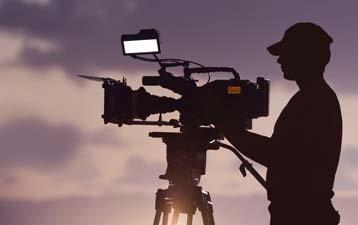 After research online I have found that the role of a cinematographer is a key aspect of the production stage. Where the Director of photography works alongside the art department in order to create the atmosphere for the film, the cinematographer is in charge of the shots executed which can be a vision of the directors or the director of photography's vision. The cinematographer is in charge of extra cameras which are on set, ensuring they operate correctly, and are in the right positions in order to create the best shots.
A key importance in the role of cinematographer is to communicate with the director in between takes to discuss the shot in order to create a better one on a second third or fourth take etc. Thus meaning that the cinematographer and director work closely together in order for the film to be executed efficiently and to the standard the director wants.
Camera operators usually begin their work at the end of pre-production, and therefore do not usually do paperwork for the film or planning. They are solely directed, working alongside the other departments such as audio, lighting and set design. All of these departments are controlled by the director themselves, as it is their vision for the film being produced.
Script Re-Write & Filming Plan
After our edit tutorial it was made clear that we had no inciting incident in our film narrative thus meaning we needed to re-write a section of the script to not only include this, but also to help make sense more of the situation the characters are in. This meant highlighting a back story, ensuring that the sound design is better to support the narrative and create more drama, and the actresses had more dialogue.
As well as this I decided to make a plan on behalf of the team to ensure that on the day of filming, because we will be short of time and we only have the actresses for a final 3 hours, it will be organised and everyone will know what they need to do, and the types of shots that need shooting whilst on set, to make sense of the narrative in the edit.
As well as this I decided to make a plan on behalf of the team to ensure that on the day of filming, because we will be short of time and we only have the actresses for a final 3 hours, it will be organised and everyone will know what they need to do, and the types of shots that need shooting whilst on set, to make sense of the narrative in the edit.
Saturday, 16 April 2016
Editing Progress
It was made clear that after the first two shoots, when piecing together the edit there was a variety of shots but however were not all usable for continuity reasons. However the shoots that created the sequence for the house scene in particular were of a length that meant it would need cutting down anyway in order to allow enough time for the other scenes in the film such as the park.
The cuts used all worked, however it was difficult to piece together a sequence without knowing what sound file went with what video file as this wasn't labelled on a clapper board or said by the director on the shoot. This made editing more stressful and time consuming.
As well as the problems with syncing up sound to the dialogue on screen it also highlighted how with the little dialogue we have in our script without the sound design present, although the edit is cleanly cut it was very bland and drew little attention to the point of the film. This to us highlighted how important the sound design is when creating a dramatic sequence of events.

The cuts used all worked, however it was difficult to piece together a sequence without knowing what sound file went with what video file as this wasn't labelled on a clapper board or said by the director on the shoot. This made editing more stressful and time consuming.
As well as the problems with syncing up sound to the dialogue on screen it also highlighted how with the little dialogue we have in our script without the sound design present, although the edit is cleanly cut it was very bland and drew little attention to the point of the film. This to us highlighted how important the sound design is when creating a dramatic sequence of events.

Subscribe to:
Comments (Atom)